The Unfathomable Depths of Self-Awareness
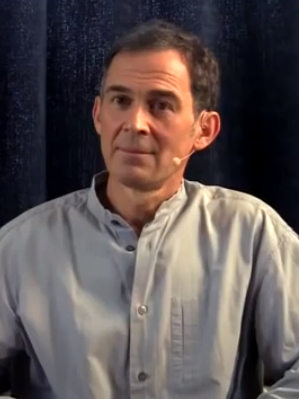
Rupert Spira's assertion that "Awareness needs no faculty to know itself" invites us into a profound exploration of the nature of consciousness. In this statement, he suggests that awareness is inherently self-revealing, existing independently of any external faculties or cognitive processes. This insight is vital for those on a spiritual journey, as it challenges the conventional understanding of self-knowledge and invites us to reconsider the essence of our being.
At its core, this quote speaks to the simplicity and immediacy of awareness itself. It implies that the act of knowing does not require an intermediary or a complex framework of thought. Instead, it is an intrinsic quality of awareness to recognize itself. This understanding can be transformative, as it encourages us to look beyond the distractions of our thoughts and emotions, guiding us toward a more direct experience of our true nature.
The image / the metaphor
The imagery in Spira's quote evokes a sense of clarity and purity. The term "awareness" conjures an expansive, luminous quality, suggesting a vastness that is both intimate and universal. The phrase "needs no faculty" implies a liberation from the confines of intellectualism and the analytical mind. It invites us to feel the essence of awareness as a direct experience, unmediated by the complexities of thought or perception.
In the speaker's tradition
Rupert Spira's teachings are rooted in the non-dual tradition, which emphasizes the interconnectedness of all existence and the fundamental unity of consciousness. Concepts such as *advaita* (non-duality) and *sunyata* (emptiness) resonate deeply with the idea that awareness is self-knowing. In this context, awareness transcends the dualistic notions of subject and object, revealing a profound truth: that the observer and the observed are not separate but are expressions of the same underlying reality.
In the *Upanishads*, ancient texts that explore the nature of reality and consciousness, we find echoes of Spira's insights. The *Tat Tvam Asi* (That Thou Art) teaching encapsulates the essence of non-duality, affirming that our true self is not distinct from the ultimate reality. This ancient wisdom aligns beautifully with Spira's assertion, reinforcing the idea that awareness is not a product of thought but rather the very ground from which all experience arises.
Living the teaching
Consider a modern scenario where this teaching can be applied: during a moment of stress at work, when the mind races with thoughts of deadlines and expectations. In such instances, one might pause to reconnect with the awareness that underlies those thoughts. By simply observing the flow of thoughts without judgment or attachment, one can experience a profound sense of calm and clarity, realizing that the essence of who we are is not defined by the chaos of the mind but by the stillness of awareness itself.
Another application of this teaching can be found in relationships, particularly during conflicts or misunderstandings. When emotions run high, it is easy to become entangled in reactive patterns. However, if we can remember that awareness itself is the space in which these emotions arise, we can choose to respond from a place of understanding rather than reactivity. This shift allows for deeper connection and compassion, fostering a sense of unity rather than division.
A reflection
As we contemplate Spira's profound statement, we may ask ourselves: "What does it mean to be aware of my own awareness?" This question invites us to explore the nature of our consciousness and to recognize the inherent wisdom that resides within. By engaging with this inquiry, we open ourselves to the possibility of experiencing life from a place of clarity and presence, allowing awareness to illuminate our path.



Join the BrightStar Community
Stay connected with daily inspiration, event announcements, and community wisdom